Media Foreign Affairs and National Security 2026.09.04
Sanctioning the International Criminal Court: The view from Tokyo
Japan should defend the ICC from U.S. pressure while confronting the legal and political limits that threaten the court’s long-term legitimacy
The Japan times on Aug 28, 2026
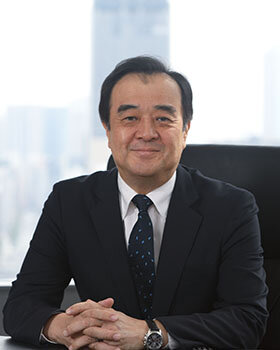
In response to the Trump administration’s Aug. 18 announcement that it would impose sanctions on International Criminal Court President Tomoko Akane and others, Prime Minister Sanae Takaichi said on Aug. 25 that the move was “not consistent with Japan’s position” and that Japan viewed it “with great concern.” But she rejected criticism that her government’s response was “weak-kneed.”
U.S. Secretary of State Marco Rubio defended the sanctions, calling the ICC “a corrupt and fatally politicized supranational court that has maliciously abused its authority and exceeded its mandate.”
In the Japanese press, however, the sanctions have drawn widespread criticism. Editorials in the country’s leading national newspapers were nearly unanimous in opposing Washington’s action and urging Tokyo to take a stronger stand.
The Asahi Shimbun called on Japan to work with other countries to demand that the sanctions be withdrawn and warned against allowing concern for the U.S.-Japan alliance to inhibit Tokyo’s response. The Mainichi Shimbun similarly urged the government to protest at the highest levels and argued that the episode exposed the limits of a foreign policy overly deferential to Washington.
The Yomiuri Shimbun called the U.S. pressure “unacceptable” and questioned whether the government had shown sufficient resolve to defend both the rule of law and the ability of a Japanese citizen to carry out her international duties. The Nikkei urged Japan to continue supporting the ICC despite U.S. pressure. Even the conservative Sankei Shimbun concluded that the U.S. argument for dismantling the court “goes too far.”
But this broad consensus risks framing the issue too narrowly. The central question is not simply whether Japan has yielded to U.S. pressure or intimidation. It is what the ICC itself must do to strengthen the rule of law in an international system where legal authority remains constrained by political reality.
An editorial in the Hokkoku Shimbun, a regional newspaper serving Ishikawa and Toyama prefectures, offered a markedly different perspective. While criticizing undue pressure on Akane, it acknowledged that the ICC, like other international institutions, is not beyond criticism and questioned whether Japan should continue its substantial support without examining the court’s conduct and effectiveness.
That argument points toward a larger problem largely missing from the debate.
The rule of law ultimately depends on the ability to secure compliance with legal rules. In domestic legal systems, courts operate alongside police and other institutions capable of enforcing their decisions. International law has no comparable centralized coercive authority. Its institutions depend heavily on states for cooperation and enforcement.
That structural weakness makes the international rule of law particularly vulnerable. When enforcement cannot be guaranteed, decisions that are perceived as exceeding an institution’s authority can undermine confidence not simply in a particular ruling but in the institution itself.
Leaders of international organizations therefore operate at the intersection of law and international politics. Protecting the independence of such institutions is essential, but so is exercising the judgment necessary to preserve their legitimacy and effectiveness.
That dilemma is particularly acute for the ICC. Major powers including the United States, Russia and China are not parties to the Rome Statute, while Israel has signed but not ratified it. The court nevertheless can exercise jurisdiction in certain circumstances involving nationals of nonmember states, including when alleged crimes occur on the territory of an ICC member or when jurisdiction is otherwise established under the statute.
The legal possibility of exercising jurisdiction, however, does not eliminate the larger institutional question. When the ICC pursues leaders of states that reject its authority, it must consider not only the legal basis for its actions but also their consequences for the court’s long-term legitimacy and effectiveness.
That is not an argument that Akane necessarily made the wrong decision, nor is it a defense of U.S. sanctions. Washington’s attempt to punish officials of an international court raises serious concerns of its own.
Rather, it reflects a structural limitation of international law: Unlike domestic law, it lacks a universally accepted enforcement mechanism. That reality demands an unusually refined balance between legal principle, institutional authority and political judgment. A court that ignores political realities risks weakening its ability to advance the very principles it was created to defend.
Prime Minister Takaichi has said Japan has pursued its concerns with Washington “to the very limit at various levels” and shares the sense of crisis and concern facing Akane.
Japan is right to support the ICC and its Japanese president. But support should not mean treating the institution as immune from scrutiny. As one of the court’s most important supporters, Japan should also encourage the ICC to pursue realistic, effective and legally grounded policies that strengthen its legitimacy over the long term.
The goal should be larger than defending the ICC from Washington. It should be ensuring that the court itself remains capable of advancing the international rule of law in a world where law and power cannot easily be separated.